Commercial Concrete Cost in Southern Colorado: How Bids Are Built in 2026
If you manage commercial property or build in Southern Colorado, you already know that a concrete bid is rarely a single number you can take at face value. Two proposals for the same parking lot or building pad can differ by 30 or 40 percent, and the lower one is not automatically the better deal. Understanding how a commercial concrete bid is actually assembled, line by line, is the difference between a budget that holds and a project that surprises you halfway through.
This guide breaks down commercial concrete cost in Southern Colorado for 2026: the current price ranges, the specific factors that move a bid up or down, and the regional realities, from higher-altitude sites like
Woodland Park to expanding developments in
Pueblo and
Monument, that shape what you actually pay. The goal is to help property managers, developers, and general contractors read a bid with a professional eye, compare proposals on equal footing, and recognize when a low number is hiding a future repair cost.
What a Commercial Concrete Bid Actually Includes
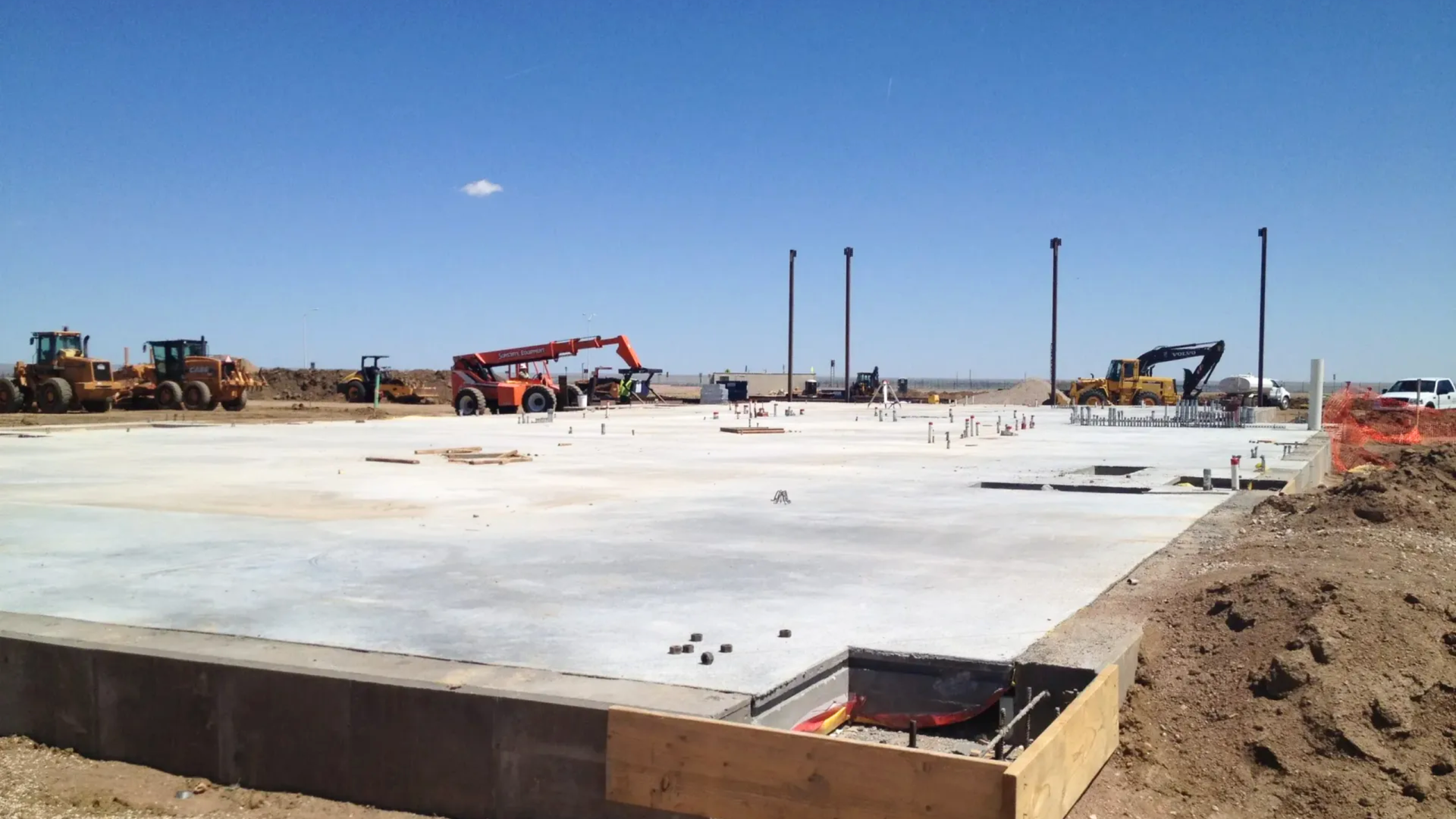
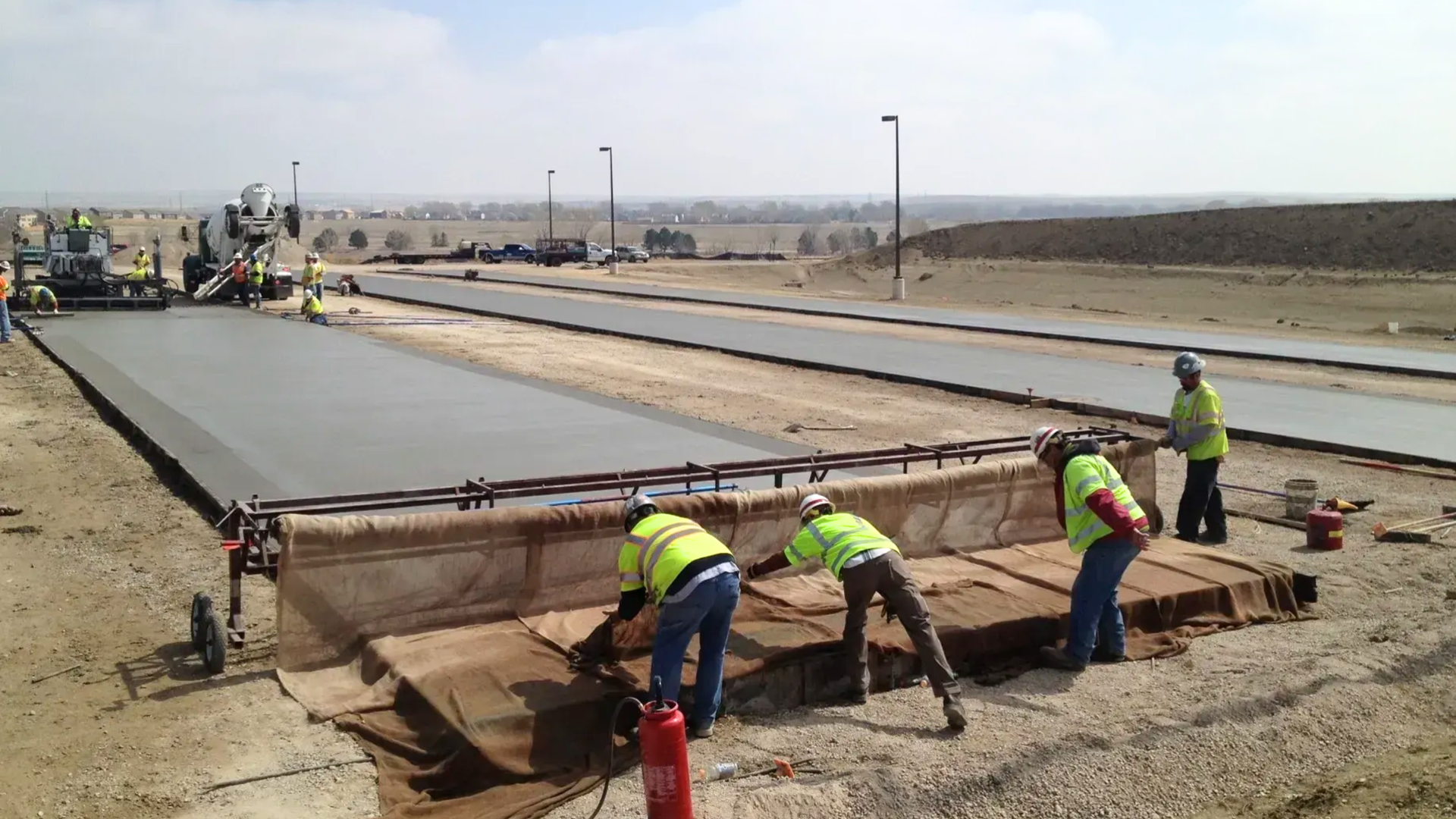
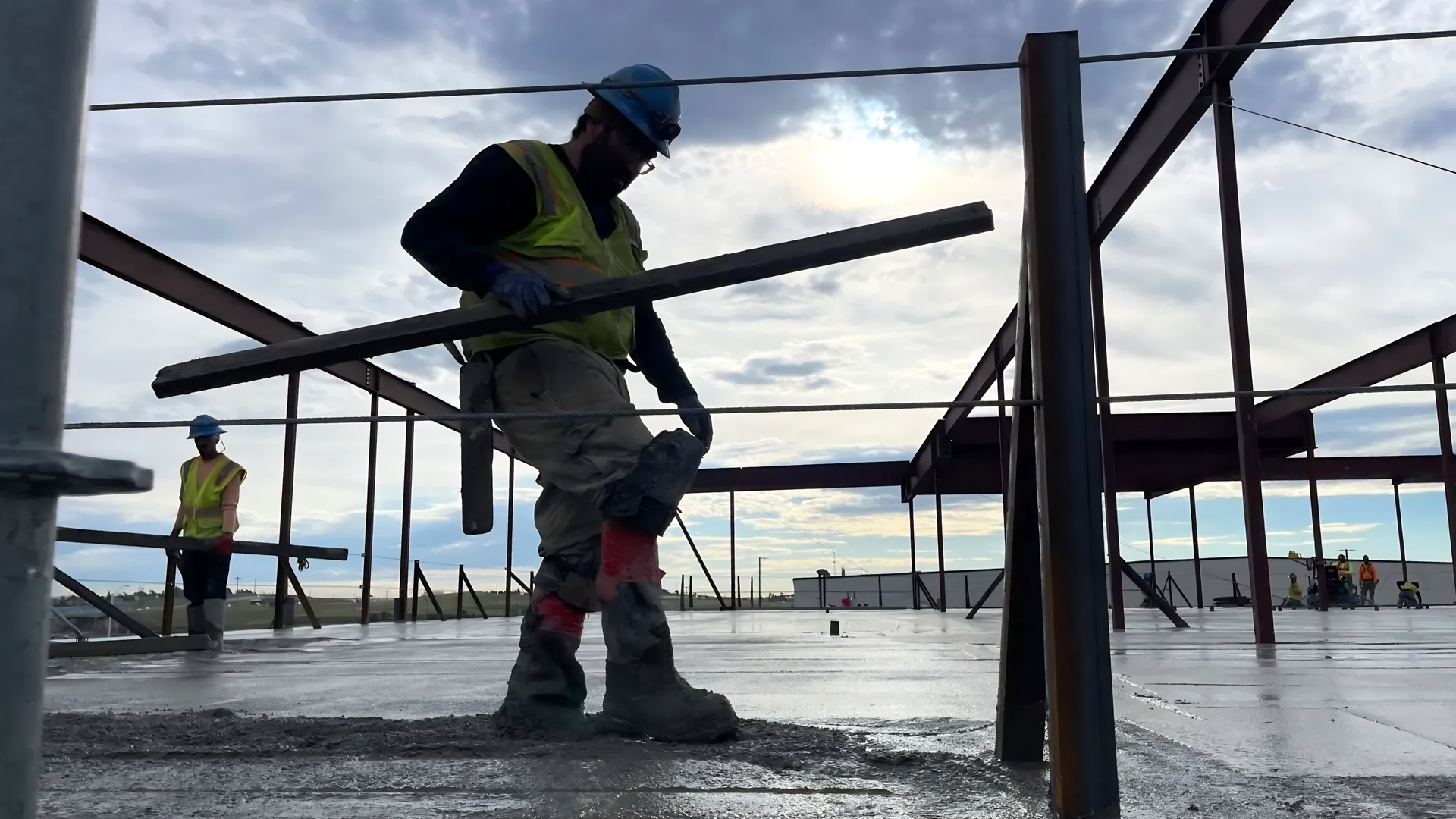
A common mistake is to think of concrete pricing as just the cost of the material in the truck. Ready-mix is only one line in a much larger estimate. A complete commercial bid bundles excavation, site grading, base preparation, formwork, reinforcement, concrete placement, finishing, curing, and cleanup, and on larger jobs it also reflects access constraints, pumping, haul-off, laser-screed use, and the documentation that commercial and municipal work requires.
That is why a bid showing only a single total, with no line items, is not really a complete bid. A legitimate proposal specifies slab dimensions, thickness, mix strength, reinforcement type and spacing, sub-base depth, finish type, the control-joint plan, curing method, and any exclusions. When each piece is spelled out, you can compare bids fairly. When it is not, you are comparing guesses.
2026 Price Ranges for Commercial Concrete
Commercial concrete is priced two ways, and knowing the difference protects you when reading a proposal. Ready-mix is quoted per cubic yard and reflects material only, while installed work is quoted per square foot and includes labor, equipment, forming, and finishing. For budgeting a project, the per-square-foot number is the one that matters.
Nationally in 2026, ready-mix runs roughly $125 to $180 per cubic yard delivered, with standard 3,000 PSI mixes at the low end and higher-strength or fiber-reinforced mixes pushing past $175. Installed commercial flatwork generally lands between about $8 and $18 per square foot depending on thickness, reinforcement, and finish, with heavy-duty industrial slabs for warehouse or forklift traffic often in the $10 to $15 range and higher. These are planning figures, not quotes: your actual number depends on the specifics below, and a site visit is the only way to price a real project.
The table below shows typical 2026 ranges for common commercial scopes. Treat them as starting reference points for budgeting conversations.
| Commercial Scope | Typical 2026 Range | Primary Cost Drivers |
|---|---|---|
| Standard flatwork / sidewalk | $8 to $12 per sq ft | Thickness, base prep, finish |
| Parking lot / drive lanes | $8 to $15 per sq ft | Traffic loads, thickness, drainage |
| Heavy-duty industrial slab | $10 to $18 per sq ft | Load rating, reinforcement, flatness spec |
| Structural foundations | $10 to $20+ per sq ft | Formwork complexity, PSI, rebar density |
| Ready-mix (material only) | $125 to $180 per cu yd | Mix strength, delivery distance, additives |
The Factors That Move a Bid Up or Down
Once you understand what a bid contains, the variation between proposals starts to make sense. A handful of factors account for most of the spread.
Thickness and mix strength are the foundation of the number. A six-inch slab uses roughly 50 percent more concrete than a four-inch slab across the same footprint, though labor changes little because the same crew forms and finishes the same area. Strength matters too: standard flatwork often uses 3,000 to 4,000 PSI, while heavily loaded slabs and structural elements call for 4,000 to 5,000 PSI. Over-specifying wastes money, and under-specifying invites premature failure, so a good contractor matches the mix to the actual loads.
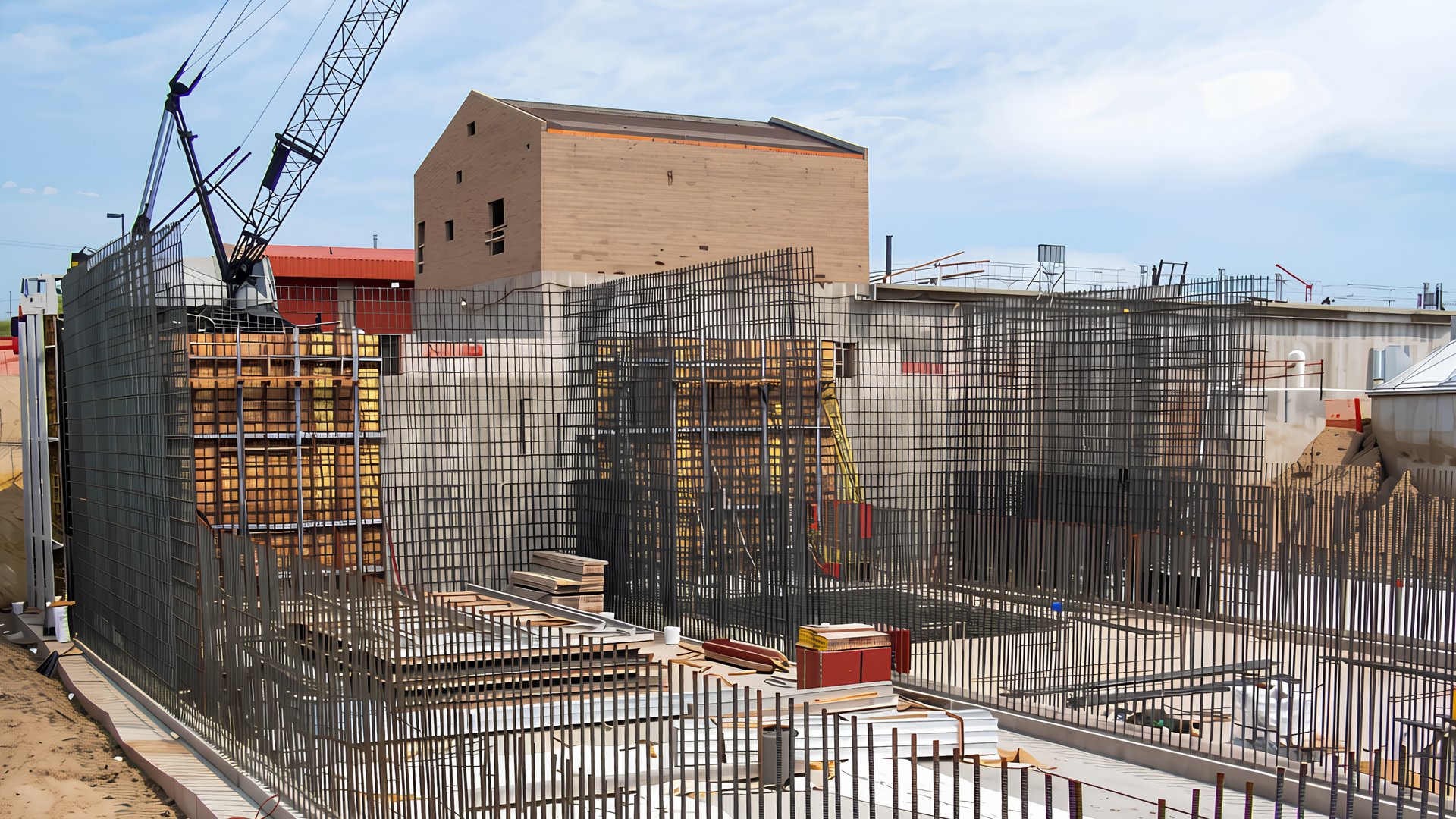
Reinforcement is the next lever. Wire mesh suits light-use surfaces, while rebar grids are standard for parking areas, industrial slabs, and structural work. Reinforcement typically adds a dollar or more per square foot, but on load-bearing surfaces it is money well spent, because it directly controls cracking and extends service life.
Site and subgrade conditions are where bids diverge the most, and where Southern Colorado's geography earns its own line. Excavation and grading costs climb with rocky soils, slopes, and soft or expansive ground, all of which show up across the Front Range and foothills. Weak or uneven subgrade must be corrected before any concrete is placed, through added excavation, compaction, or aggregate base, and skipping that step is exactly how a cheap bid becomes an expensive repair.
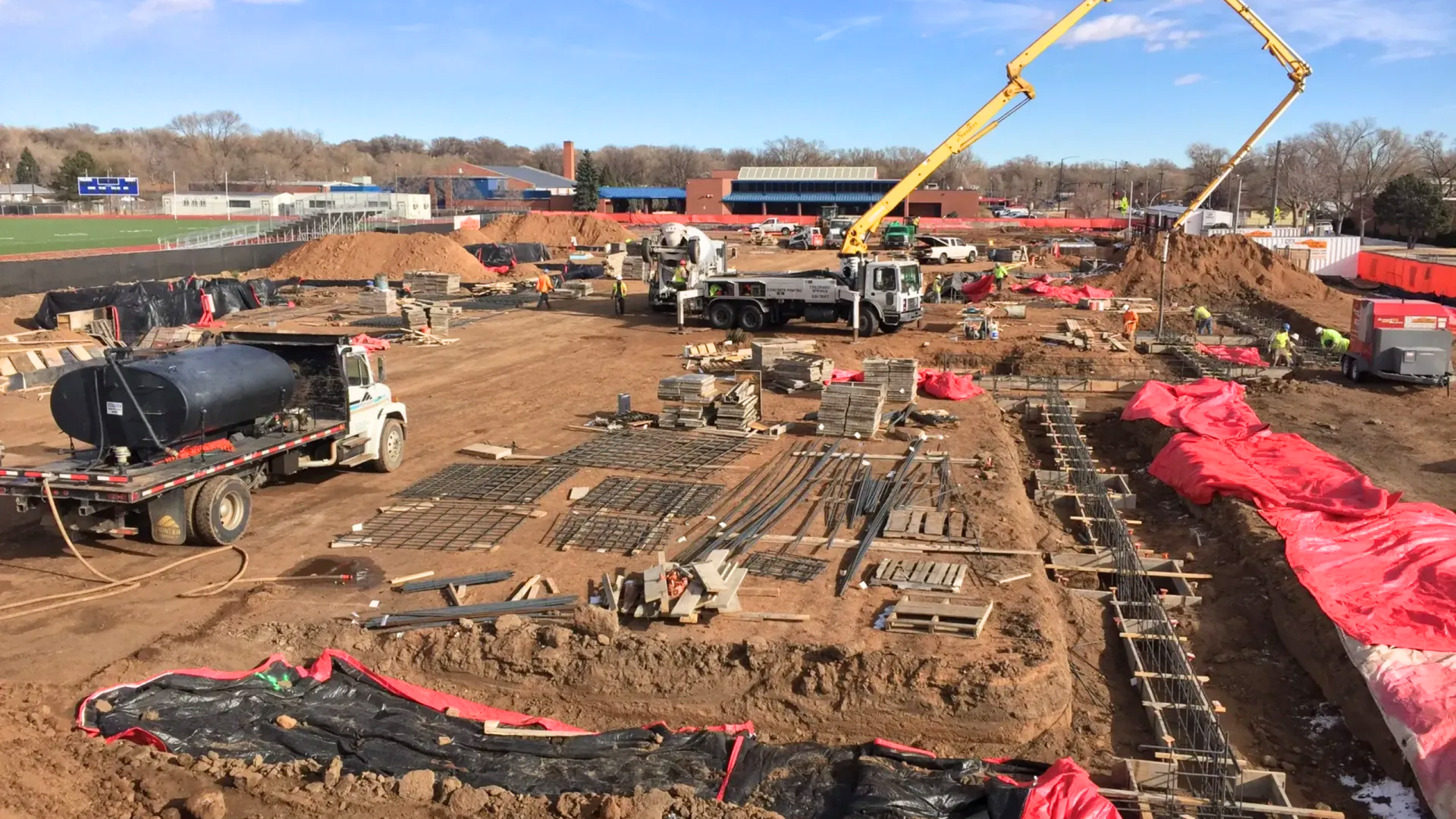
Access and site logistics affect price in ways that are easy to overlook. Tight urban sites, multi-family podium decks, and parking structures often need pumps, smaller equipment, or extra labor because trucks cannot reach the pour directly. A line pump or boom pump is a real line item on many commercial jobs, not an afterthought.
Finish and flatness requirements round out the picture. A broom-finish utility slab is simpler and cheaper than a floor held to a tight flatness tolerance or a refined architectural finish, both of which add finishing labor and time.
Why Southern Colorado Adds Its Own Cost Layer
National averages only take you so far, because our region imposes conditions that a generic estimate will not capture. Elevation and climate are the big ones. At higher-altitude sites like Woodland Park, and across the broader Front Range, the freeze-thaw environment demands air-entrained concrete and careful curing to resist the more than 100 freeze-thaw cycles a typical year brings. Cold-weather pours in late fall and winter require heated materials, insulated blankets, and extended protection, which add cost but protect the slab from permanent early-freeze damage.
Soil conditions vary widely across El Paso, Pueblo, and the surrounding counties, and expansive or unstable soils can require deeper foundations, additional base work, or engineered solutions that a flat, stable site would not. In growing sub-divisions around Pueblo and Monument, tight structural pours coordinated with other trades add scheduling complexity that a standalone estimate rarely reflects. And permitting and inspection requirements for commercial and municipal work carry their own costs and timelines, which an experienced local contractor builds into the plan rather than discovering mid-project.
The throughline is that an accurate commercial bid in this region is a local document. It reflects the altitude, the soil, the season, and the code environment of the specific site, which is why a contractor who works here every day can price a project more reliably than a number pulled from a national calculator.
How to Compare Commercial Concrete Bids
The best protection against a budget surprise is a disciplined comparison. Insist that every bid is written to the same scope, with matching thickness, PSI, reinforcement, base preparation, and finish, so you are comparing identical work rather than different assumptions. Get at least three bids for a meaningful project, and read the exclusions as carefully as the inclusions, because what a proposal leaves out often explains why it is cheaper.
Be cautious with any number that sits far below the others. In commercial work, an unusually low bid frequently signals a thinner slab, undersized reinforcement, or light site preparation, and those shortcuts surface later as cracking, settlement, or early replacement. The lowest number on paper is not the same as the best long-term value. A bid that clearly documents its scope, from subgrade to curing, is far more trustworthy than one that simply names a price.
It also helps to ask how the contractor handles the variables that matter most here: how they prepare and verify subgrade, what curing methods they use in our dry, freeze-prone climate, whether they use air-entrained concrete, and how they manage cold-weather pours. Clear, specific answers are a strong signal that the bid is built on real planning.
If your project spans several scopes, it is worth understanding how each is priced. Property owners weighing surface options often review commercial concrete flatwork for their property alongside structural work, and those elements interact in both scheduling and cost. Our team is glad to walk through a full-site estimate that accounts for every phase.
Frequently Asked Questions
Get an Accurate Commercial Concrete Estimate
A reliable commercial concrete budget in Southern Colorado starts with a bid that shows its work: every scope spelled out, matched to the loads and soil of your specific site, and priced by a contractor who understands our altitude, climate, and code requirements. Read proposals line by line, compare them on equal footing, and treat a bargain number with healthy skepticism.
With over 42 years of commercial, structural, and federal concrete experience across Colorado Springs, Pueblo, Monument, Woodland Park, Castle Rock, and Trinidad, Peak Concrete Enterprises builds bids that hold up and slabs that last. Whether you are planning a parking lot, a warehouse floor, a foundation, or a full-site development, we will give you a clear, detailed estimate you can actually plan around. Contact us today to discuss your project and request a commercial estimate.
Commercial Concrete Slabs in Colorado Springs: Cost, Thickness, and What Property Owners Should Know