Commercial Concrete Retaining Walls in Colorado Springs: Cost, Design, and What Property Owners Should Know
Retaining walls play an important role in many commercial construction projects in Colorado Springs. They control soil movement, support changes in elevation, and help create stable building areas on sloped land.
Without a properly built retaining wall, soil can shift over time. This movement can damage foundations, parking lots, sidewalks, and other structures on the property.
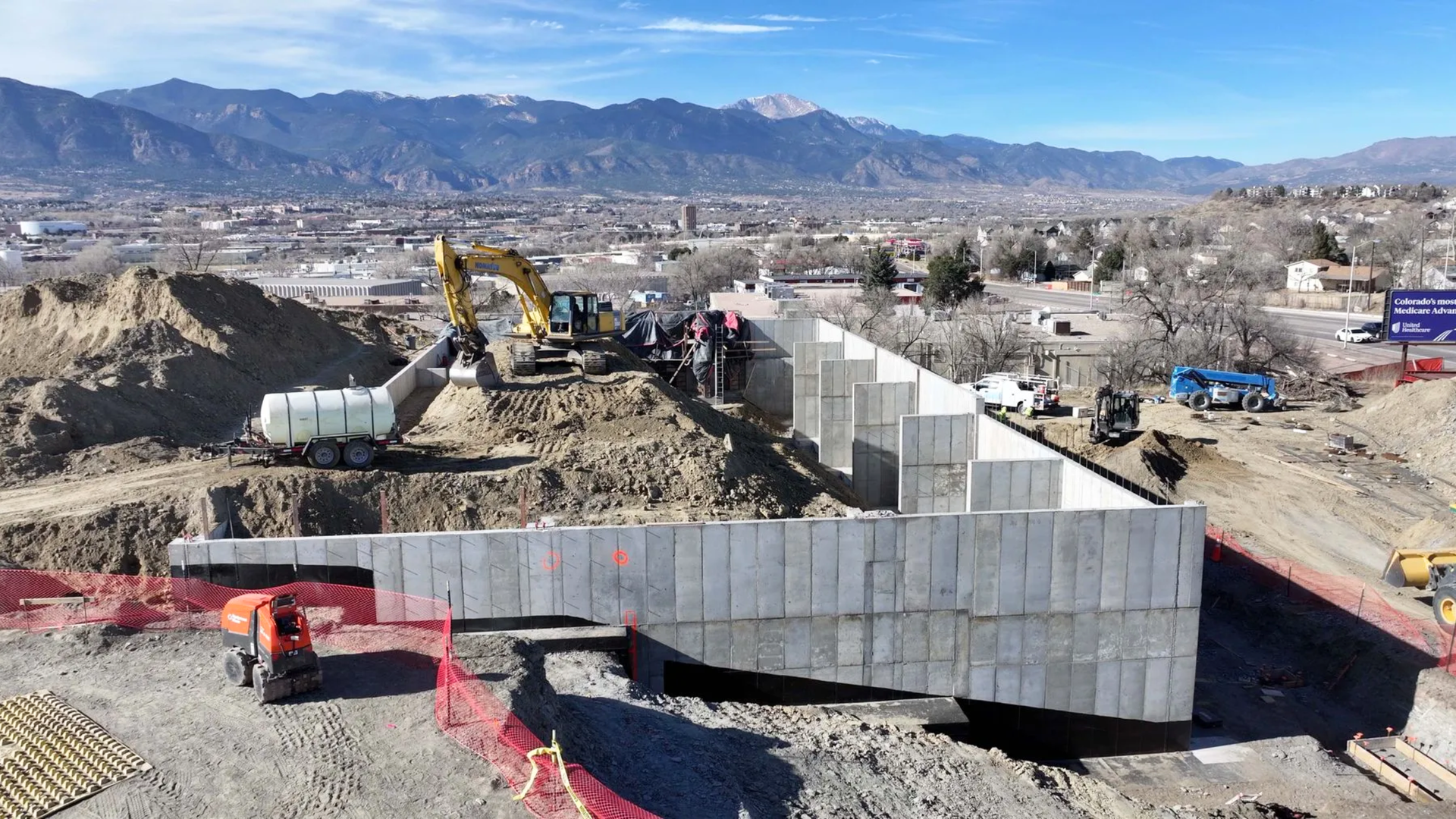
Commercial concrete retaining walls are designed to hold back large amounts of soil and manage drainage safely. When installed correctly, they protect your property and improve long-term site stability.
Retaining walls are often built as part of larger site development projects included in Commercial Concrete Services in Colorado Springs.
What a Commercial Retaining Wall Does
A retaining wall holds soil in place when the ground level changes. Instead of allowing soil to slide or erode, the wall supports the earth and keeps the surrounding area stable.
Commercial retaining walls are commonly used to:
- Create level building areas
- Support parking lots or access roads
- Stabilize sloped properties
- Prevent erosion
- Improve drainage control
- Protect nearby structures
These walls must be strong enough to resist the pressure created by soil and water behind them.
For this reason, most commercial retaining walls require structural reinforcement and engineered design.
Common Types of Commercial Concrete Retaining Walls
Different wall designs are used depending on soil conditions, site layout, and wall height.
Gravity Retaining Walls
Gravity walls rely on their own weight to hold back soil. Because they are thick and heavy, they resist soil pressure without complex reinforcement.
They are commonly used for shorter walls or smaller elevation changes.
Reinforced Concrete Retaining Walls
Reinforced concrete walls include steel reinforcement inside the concrete. This reinforcement allows the wall to handle heavier soil pressure.
These walls are frequently used in commercial construction because they provide strong structural performance.
Cantilever Retaining Walls
Cantilever retaining walls use a reinforced base slab that extends into the soil behind the wall. This design spreads the load and allows taller walls to be built safely.
Cantilever systems are common in commercial developments and parking areas.
Counterfort Retaining Walls
Very tall retaining walls may include counterfort supports behind the wall. These supports strengthen the structure and reduce stress on the wall.
This design is used in larger commercial developments and infrastructure projects.
When Commercial Retaining Walls Are Needed
Retaining walls are required whenever elevation changes create unstable soil conditions.
Common examples include:
- Sloped commercial building sites
- Parking lot elevation changes
- Driveway entrances on hills
- Property grading adjustments
- Erosion control areas
- Drainage management zones
Without retaining walls, soil can shift or wash away during heavy rain or snow melt.
These systems often work alongside concrete foundations to stabilize the building site.
Retaining Wall Height and Engineering
Wall height plays a major role in determining whether engineering is required.
In many jurisdictions, retaining walls taller than four feet require engineering and permits.
Commercial retaining walls frequently exceed this height and must follow structural design requirements.
Engineers evaluate factors such as:
- Soil pressure
- Wall thickness
- Reinforcement layout
- Drainage systems
- Foundation stability
This process ensures the wall safely supports the soil behind it.
Cost of Commercial Concrete Retaining Walls in Colorado Springs
Retaining wall costs vary depending on height, soil conditions, drainage systems, and reinforcement requirements.
Below are typical price ranges for professionally installed commercial retaining walls.
| Retaining Wall Type | Typical Installed Cost |
|---|---|
| Small reinforced wall | $60 – $90 per sq ft |
| Structural retaining wall | $80 – $140 per sq ft |
| Tall engineered retaining wall | $120 – $200+ per sq ft |
| Large commercial retaining wall project | $75,000 – $300,000+ |
These ranges typically include excavation, reinforcement, concrete placement, and drainage systems.
What Affects Retaining Wall Cost
Several factors influence the final cost of a retaining wall project.
The most common cost drivers include:
- Wall height
- Soil conditions
- Reinforcement requirements
- Drainage design
- Excavation depth
- Site accessibility
Walls built on steep slopes or tight construction areas usually require additional labor and equipment.
Why Drainage Is Critical for Retaining Walls
Drainage is one of the most important parts of retaining wall construction.
When water builds up behind a wall, pressure increases. This pressure can weaken the structure and eventually lead to failure.
To prevent this, contractors install drainage systems behind the wall.
Typical drainage components include:
- Perforated drain pipes
- Gravel drainage layers
- Filter fabric
- Surface water control systems
Proper drainage helps reduce pressure behind the wall and improves long-term performance.
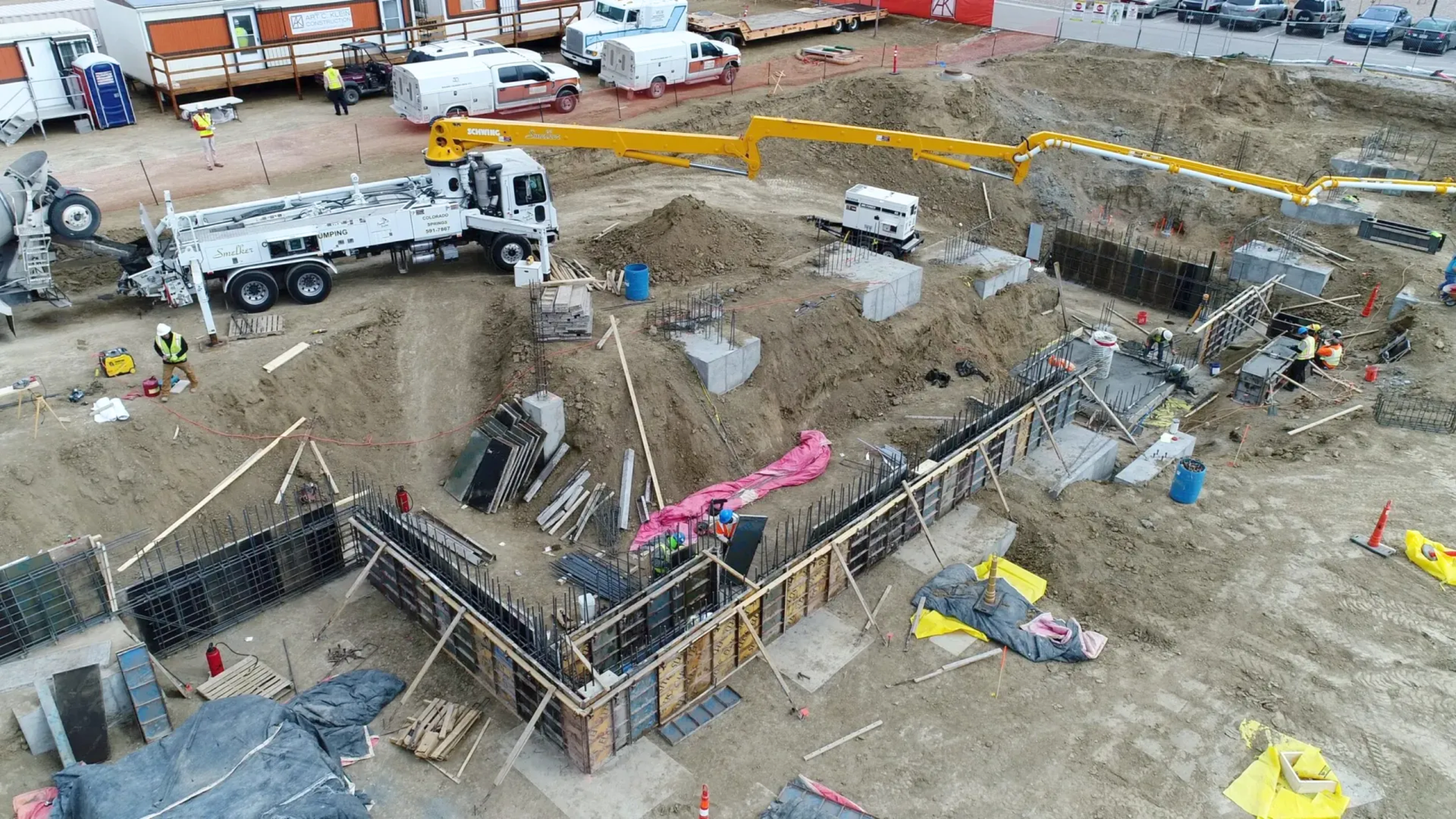
How Commercial Retaining Walls Are Built
Retaining wall construction follows a structured process to ensure long-term stability.
Site Preparation
The site is excavated to make room for the wall footing and drainage materials.
Footing Installation
A reinforced concrete footing is installed below the wall to distribute weight evenly and support the structure.
Reinforcement Placement
Steel reinforcement is placed inside the wall forms according to engineering plans.
Concrete Placement
Concrete is poured into the forms and allowed to cure properly.
Drainage System Installation
Drain pipes and gravel layers are installed behind the wall to manage water flow.
Backfilling and Compaction
Soil is placed behind the wall in controlled layers and compacted to maintain stability.
Each stage helps ensure the wall performs properly over time.
Soil Conditions in Colorado Springs
Colorado Springs has a variety of soil types, including expansive clay soils.
Expansive soils expand when wet and shrink when dry. This movement can create pressure on retaining walls and foundations.
To manage these conditions, contractors may use:
- deeper footings
- stronger reinforcement
- engineered backfill materials
- improved drainage systems
A soil evaluation helps determine the appropriate design for the retaining wall.

Lifespan of Concrete Retaining Walls
Concrete retaining walls are designed for long-term durability.
When installed correctly, they can last several decades or longer.
Factors that affect lifespan include:
- reinforcement quality
- drainage performance
- soil stability
- installation practices
Concrete retaining walls generally last longer than wood or block retaining walls in commercial settings.
How Retaining Walls Fit Into Commercial Construction
Retaining walls are usually part of a larger site development project.
They often connect with:
- foundations
- parking lots
- structural concrete systems
- grading and drainage plans
Planning retaining walls alongside structural concrete services helps ensure the entire site works as one integrated system.
Maintenance and Inspection
Commercial retaining walls require periodic inspection to ensure they remain stable.
Property owners should monitor:
- drainage outlets
- visible cracks
- soil erosion
- wall movement
Early maintenance helps prevent larger structural issues later.
Choosing the Right Retaining Wall Contractor
Retaining walls require experience and careful construction.
Property owners should choose contractors who:
- have experience building commercial retaining walls
- understand Colorado Springs soil conditions
- follow engineered plans closely
- coordinate with engineers and inspectors
Because retaining walls support significant soil pressure, professional installation is essential.
Frequently Asked Questions
Do commercial retaining walls require engineering?
Most commercial retaining walls require engineering because they support large amounts of soil and must meet building codes.
How tall can retaining walls be?
Height depends on the design and soil conditions. Taller walls require additional reinforcement and engineering.
How long do concrete retaining walls last?
When properly installed, concrete retaining walls can last several decades.
What causes retaining wall failure?
Most failures occur due to poor drainage, inadequate reinforcement, or improper installation.
Are retaining walls expensive?
Costs vary depending on height, soil conditions, and structural requirements.
Your Next Step
Commercial retaining walls help stabilize sloped land and protect buildings, parking areas, and infrastructure. When designed and installed correctly, they provide long-term structural support and improve site safety.
Peak Concrete Enterprises installs retaining walls as part of its full commercial concrete services in Colorado Springs. If your property requires soil stabilization, erosion control, or grade changes,
contact our team to request a detailed estimate and discuss your project.
Commercial Concrete Slabs in Colorado Springs: Cost, Thickness, and What Property Owners Should Know