Concrete Flatwork for Commercial Properties: What You Need to Know Before You Build
Your parking lot takes a beating every single day. So does your loading dock, your sidewalks, and the apron outside your warehouse doors. These surfaces aren't glamorous — but when they fail, everyone notices. Customers trip. Deliveries get complicated. Repairs close off sections of your property at the worst possible time.
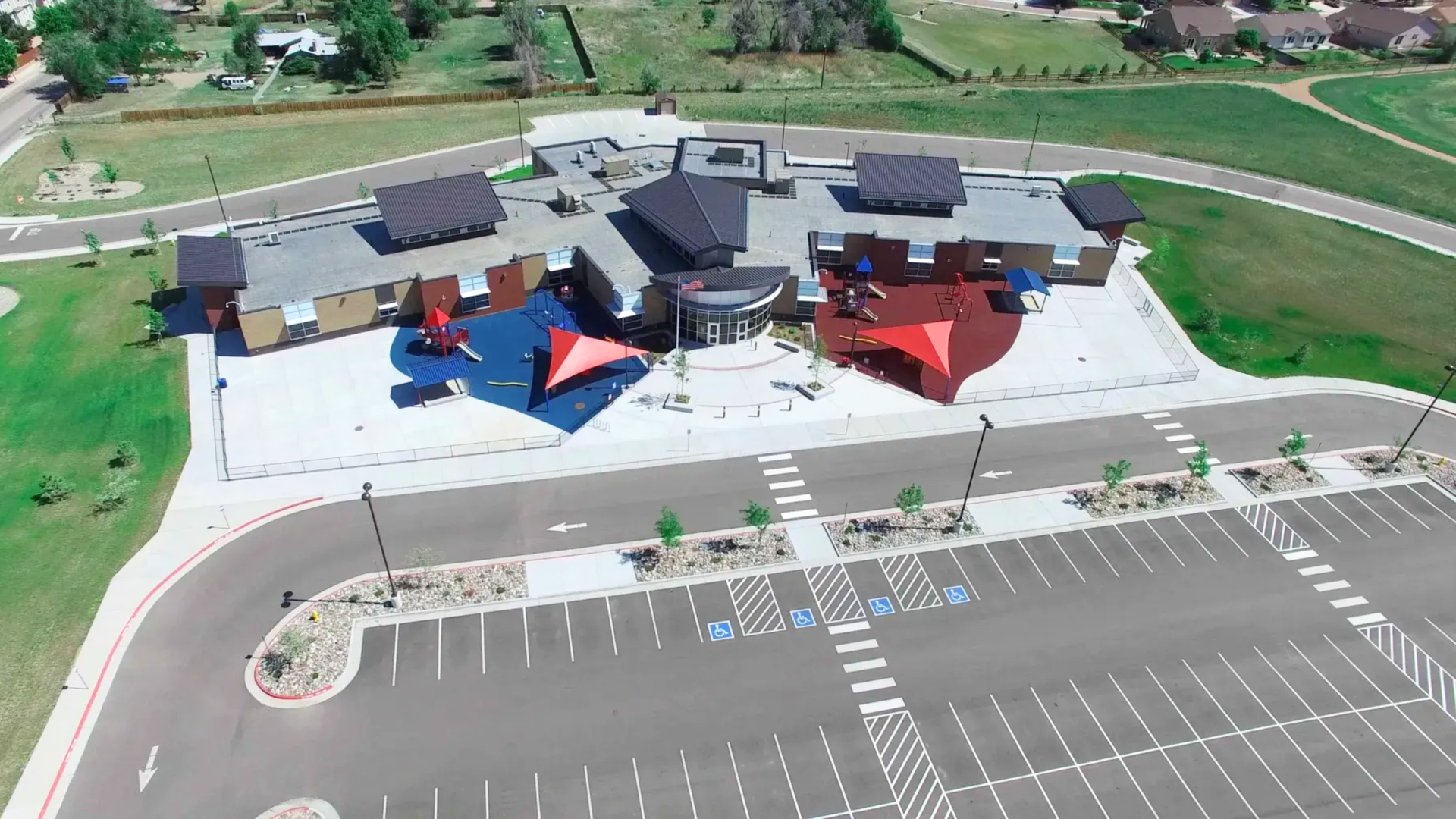
That's what commercial concrete flatwork is really about: surfaces that hold up under real-world pressure, year after year, in a climate that isn't easy on anything. If you're building a new commercial property in Colorado Springs, expanding an existing one, or managing a site where the concrete is starting to show its age, this guide is for you.
We'll walk you through what flatwork actually is, what goes into doing it right, what Colorado's climate means for your project, and how to know you're working with a contractor who won't cut corners.
What Is Commercial Concrete Flatwork?
"Flatwork" simply means any concrete surface that's poured flat — on or near the ground. If you can walk or drive on it, it's probably flatwork.
On a commercial property, that includes:
- Parking lots and drive aisles — the most common and largest flatwork scope on most sites
- Sidewalks and pedestrian walkways — regulated by ADA accessibility standards
- Loading dock aprons — high-stress zones where trucks repeatedly back in and pull out
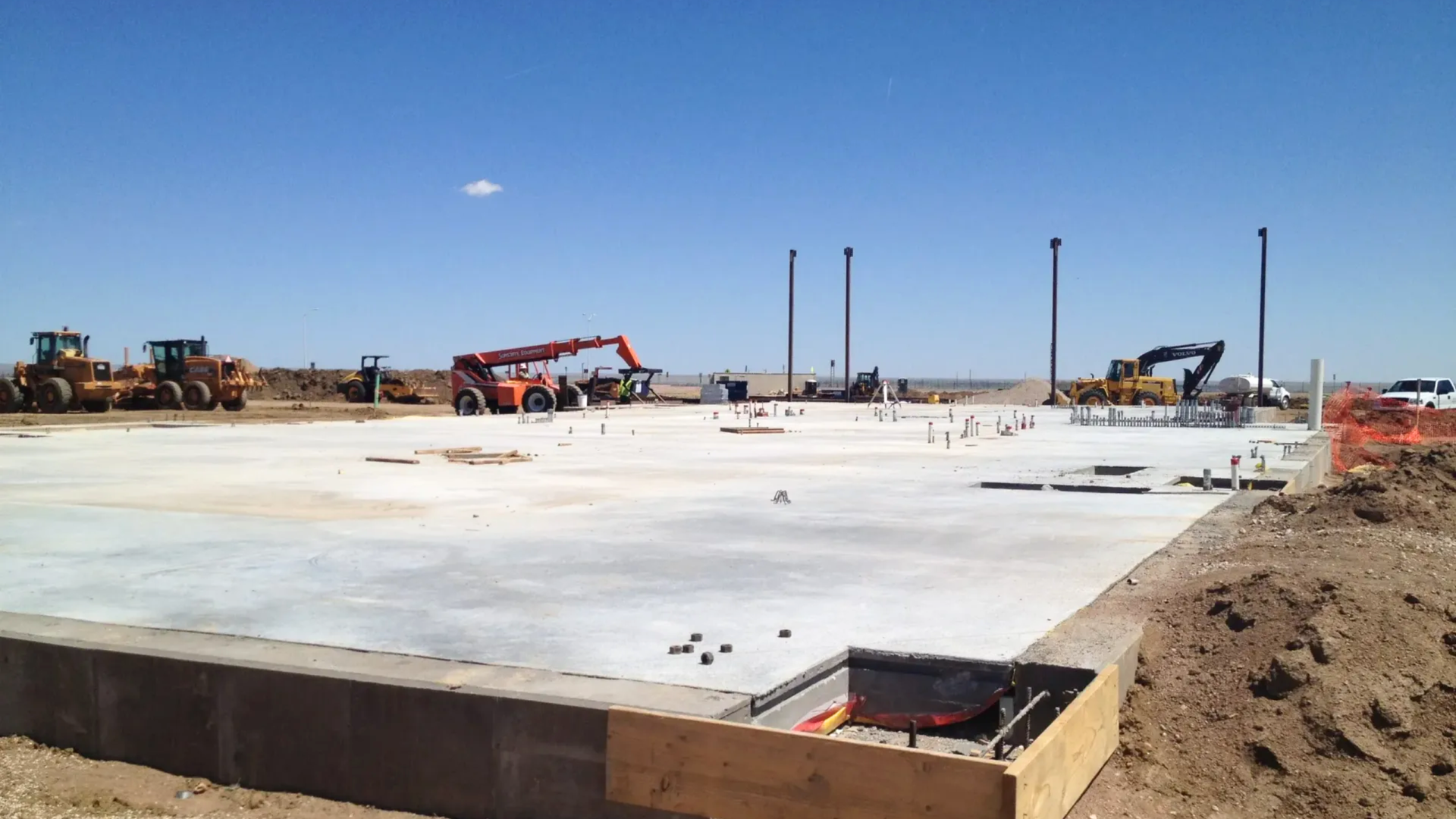
- Warehouse and distribution center floors — indoor slabs that need to handle forklifts and heavy equipment
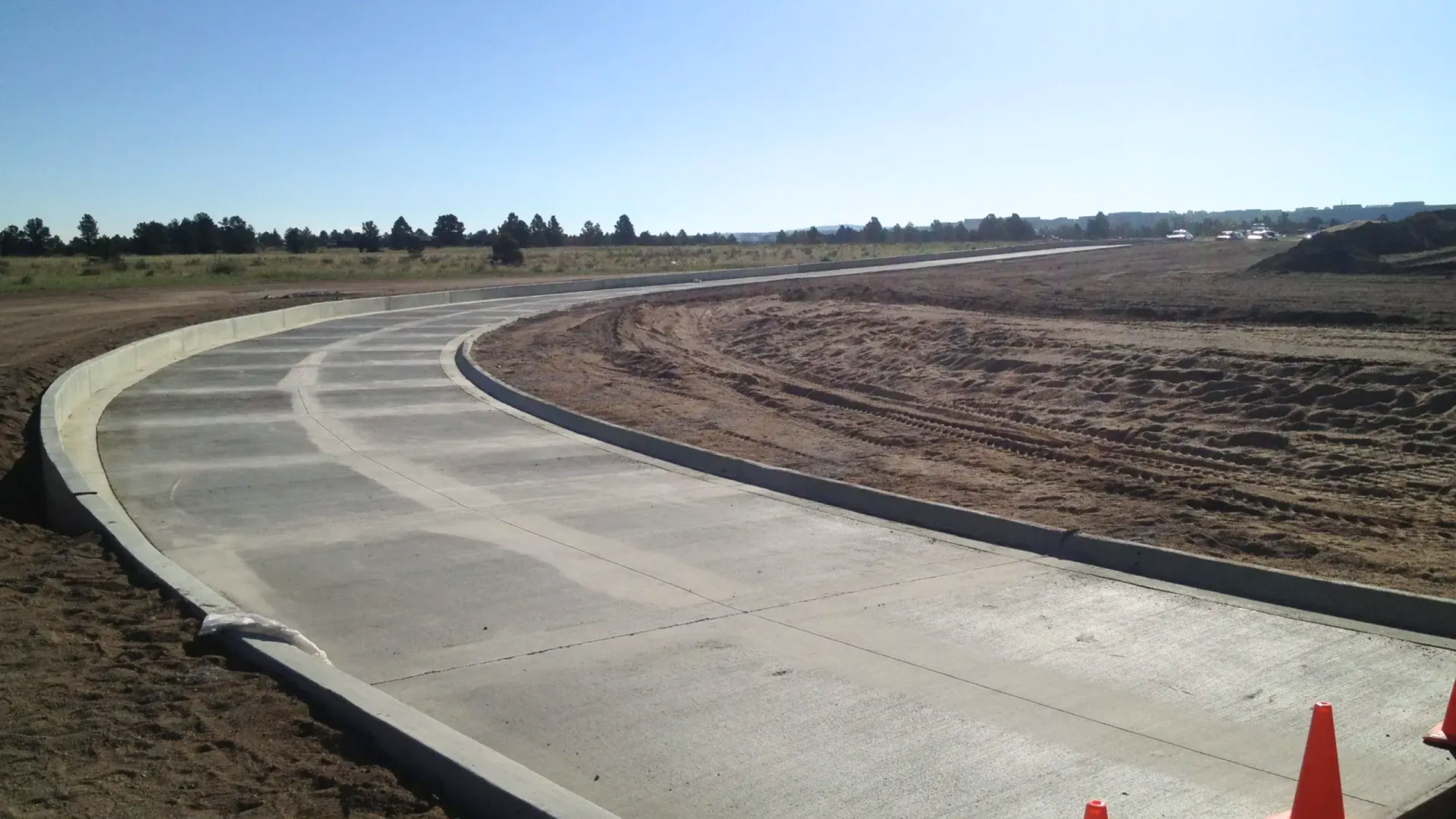
- Curb and gutter — the concrete channels that direct rainwater away from your building and parking lot
- Equipment pads — flat bases for HVAC units, generators, and mechanical systems
Each of these surfaces does a different job and gets a different mix of concrete thickness, reinforcement, and finish. A sidewalk and a loading dock apron are both flatwork — but they're not built the same way.
Why Flatwork Is More Important Than It Looks
Here's the thing about concrete: when it's done right, you forget it's there. When it's done wrong, you're reminded every day.
Poor flatwork shows up as cracks that keep spreading, surfaces that heave and settle unevenly, water pooling in places it shouldn't, and edges that chip and crumble after a few winters. Beyond the appearance, there are real costs: trip hazards create liability, drainage failures damage your landscaping and building foundation, and ADA violations can result in complaints and legal exposure.
The good news is that most of these problems are preventable — not with expensive materials, but with proper preparation, the right concrete mix, and a contractor who knows what they're doing from the first day of site prep to the final saw cut.
What "Done Right" Actually Looks Like
It Starts Below the Surface
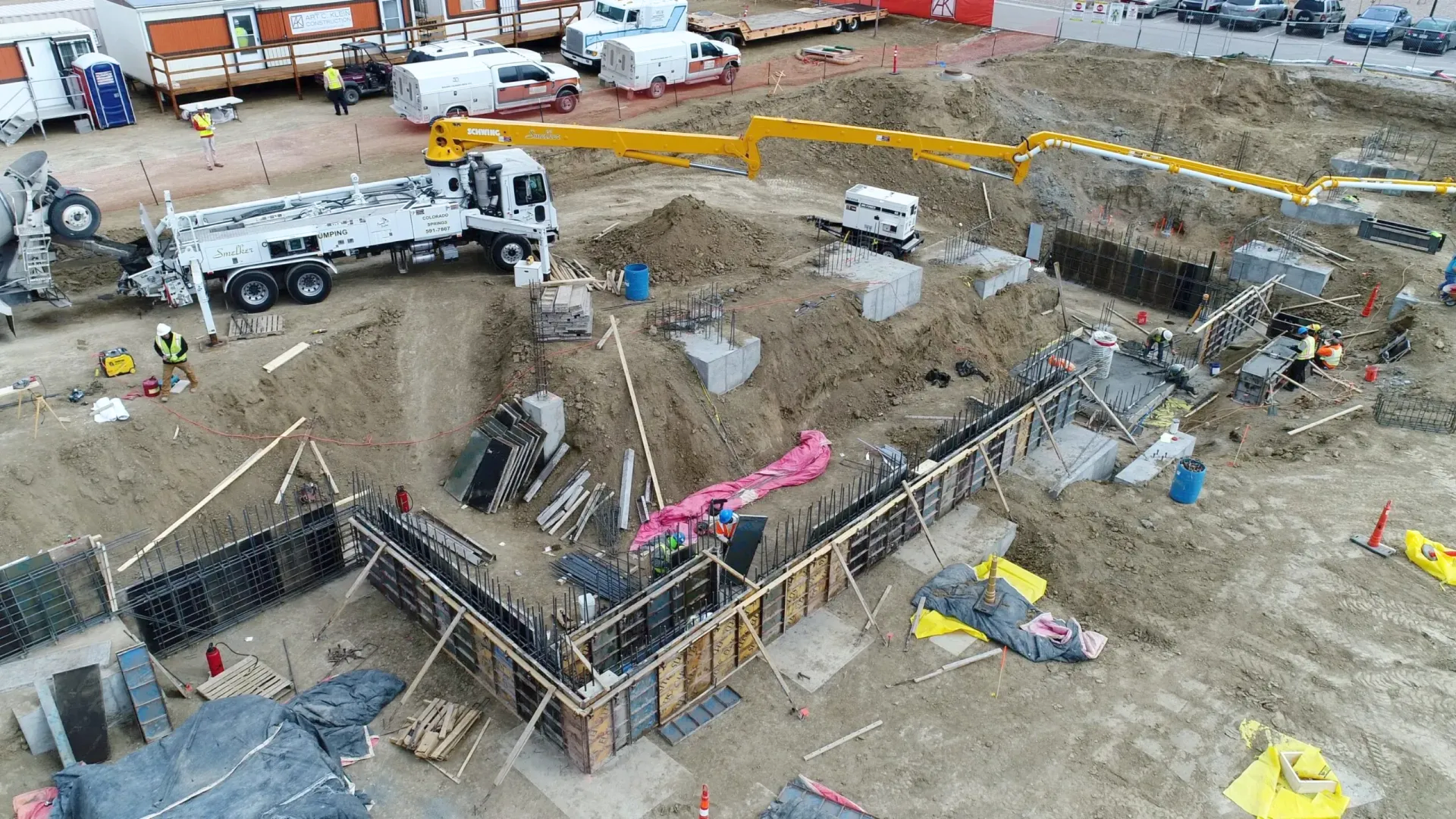
The number one cause of flatwork failure isn't the concrete — it's what's underneath it. Before a single truck pours, the ground beneath your slab needs to be properly graded, compacted, and stable. A layer of compacted crushed stone (typically 4–6 inches for commercial applications) goes between the native soil and the concrete, providing a firm, even base and helping water drain away from the underside of the slab.
If that base isn't prepared correctly — or if the ground was recently filled in and hasn't had time to settle — you'll eventually see the slab sink and crack as the soil shifts below it. No amount of thick concrete fixes a bad base.
Thickness and Reinforcement Are Matched to the Load
A sidewalk that sees foot traffic doesn't need to be built the same way as a drive aisle that takes semi-trucks. Commercial flatwork is sized to the job:
| Surface | Typical Thickness |
|---|---|
| Pedestrian sidewalks | 4–5 inches |
| Standard parking (passenger vehicles) | 5–6 inches |
| Heavy-duty parking / drive aisles | 6–8 inches |
| Loading dock aprons | 8–10 inches |
| Warehouse floors | 6–8 inches |
Steel reinforcement — either welded wire mesh for lighter surfaces like sidewalks, or steel rebar for anything carrying vehicle loads — runs through the slab to hold it together if cracks do form. The reinforcement doesn't stop concrete from cracking (concrete always cracks eventually), but it keeps cracks tight and controlled rather than letting slabs shift and separate.
Joints Are Planned, Not an Afterthought
Concrete shrinks slightly as it dries. That shrinkage causes cracks — and that's completely normal. The job of a good contractor is to control where those cracks happen by cutting joints into the surface at regular intervals, giving the concrete a planned place to relieve that pressure.
When joints are skipped, spaced too far apart, or cut too late, the concrete decides where to crack on its own — usually in the most inconvenient, most visible places. Planned joints look intentional. Unplanned cracks don't.
What Colorado's Climate Adds to the Equation
Building in Colorado Springs means dealing with conditions that can shorten the life of concrete that wasn't designed for them. A contractor who knows this area accounts for these factors upfront — one who doesn't will leave you with problems that show up in year two or three.
Freeze-thaw Cycles
Colorado Springs experiences over 160 freeze-thaw cycles a year. Every time water gets into concrete and freezes, it expands — and that expansion slowly breaks down the surface from the inside. The solution is an air-entrained concrete mix, which contains tiny air pockets that give freezing water somewhere to expand without damaging the slab. This isn't optional for exterior flatwork in this climate.
Low Humidity and Wind
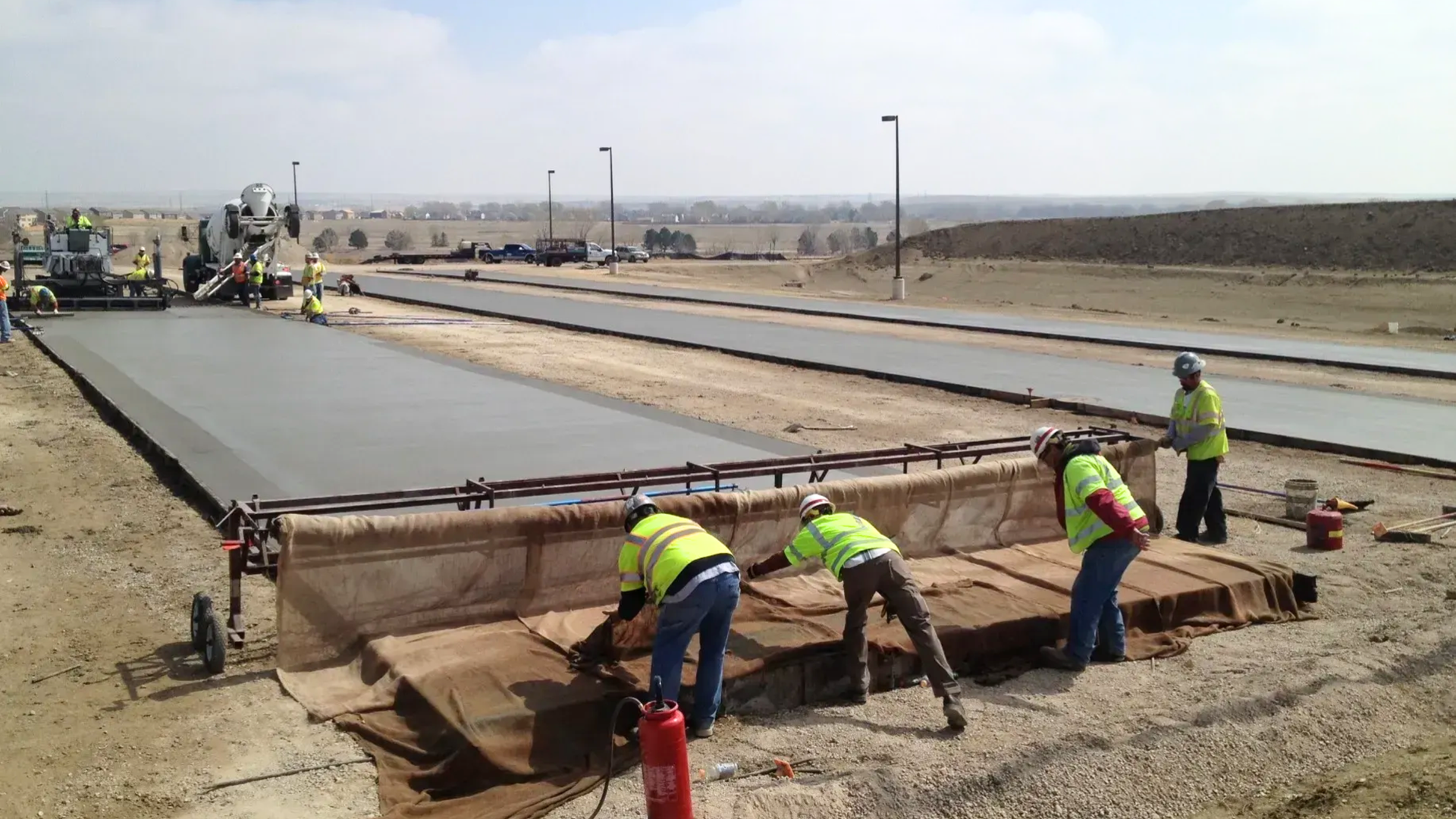
Colorado's dry air pulls moisture out of fresh concrete faster than almost anywhere else in the country. If the surface dries too quickly before it has fully cured, you get surface cracking that appears within days of the pour. Good contractors schedule pours for early morning in summer, use windbreaks when needed, and apply curing compounds to slow moisture loss.
Winter Construction
Many developers push to finish flatwork before the end of the year. Concrete poured in cold temperatures needs special handling — heated enclosures, insulated blankets, and adjusted mix designs — to cure properly. Done right, cold-weather concrete work is completely viable. Done without preparation, you end up with a slab that never reached full strength.
Road Salts
If your parking lot or drive aisles will be treated with rock salt or magnesium chloride in winter, your concrete mix needs to be specified with that in mind. Deicers are hard on standard concrete and will dramatically shorten the life of a slab that wasn't designed for the exposure.
Don't Overlook Curb and Gutter
Curb and gutter doesn't get much attention, but it's doing important work on every commercial site: channeling rainwater and snowmelt away from your building, your landscaping, and the surface of your parking lot before it has a chance to pool, seep, or freeze.
When curb and gutter is designed with inadequate slope, water sits instead of draining — and standing water in a Colorado winter becomes ice, which becomes a liability. When it's installed without coordinating with the site's drainage plan, you can end up with water running the wrong direction or backing up at inlets.
It's one of those things that's easy to do right from the start and expensive to fix after the fact.
A Note on ADA Requirements
If your property is open to the public — and most commercial properties are — your flatwork has to meet ADA accessibility standards. This affects more than just ramps. Walkways can't slope more than 2% side to side. Parking spaces can't exceed a 2% slope in any direction.
Curb ramps need specific dimensions and textured warning strips. Uneven joints or lips greater than half an inch are violations.
These requirements need to be designed in from the beginning. Forming a slab at the wrong slope and trying to correct it later is costly and disruptive. The right contractor checks for these conflicts in the drawings before any concrete is poured.
Questions Worth Asking Any Contractor
Whether you're evaluating Peak Concrete or anyone else, these questions will tell you a lot about whether a contractor is ready for commercial-scale work:
Do you have a foreman on site for the full duration of the pour?
- Large commercial pours move fast. Someone needs to be accountable for quality at the slab in real time — not checking in from a truck.
How do you handle cold-weather or hot-weather pours?
- A contractor who's done this work in Colorado should have a specific answer, not a vague one.
What's your process for joint placement?
- If the answer is "we figure it out when we get there," that's a problem. Joint layout should be planned before the pour, not improvised during it.
Can you show documentation from subbase compaction testing?
- This is standard practice on commercial work. If they're not testing, they're guessing.
Why Experience in Colorado Matters
There's a real difference between a concrete contractor who's poured slabs and one who's poured slabs here — through Colorado's temperature swings, on Colorado's expansive clay soils, in Colorado's dry air, for Colorado's winters.
Peak Concrete Enterprises has been doing commercial concrete work in Colorado Springs and Southern Colorado for over 42 years. We handle projects across the full range — from parking lots and warehouse floors to large-scale municipal and federal contracts. Every project gets a dedicated foreman, and our crews are licensed, insured, and background-checked.
If you're planning a commercial development, managing a property that needs new or replacement flatwork, or just starting to put together bids — we're happy to review your site and give you a clear, detailed estimate.